Graduate Student SupervisionAt USQ, we offer students the opportunity to work towards their doctorates on campus or remotely, and either full- or part-time. As a result, I have the great pleasure of working with a team of fantastic PhD students scattered all around the world, as well as right here in Toowoomba.
Students who do a PhD with our team at USQ usually work with a team of several supervisors (typically around three), which means they have access to people with a variety of skills and research specialities. This makes it easier for students to carry out research that is highly multidisciplinary, bringing knowledge from different areas of astronomy (and beyond) to bear on their chosen research topics. If you are interested in undertaking a research degree with our team at USQ (either at Masters or PhD level), check out the information on the Centre for Astrophysics' Study Page, and take a look at our Research page to get a feel for the breadth of research topics we can support. I am currently unable to take on additional students in 2022, but my colleagues in the Centre for Astrophysics are always happy to talk to potential students who might wish to study with us at USQ! Current Students Adriana Errico: Exoplanetary Science Chris Johnson: Fireballs and Meteorites (Masters) Christoph Tylor: The Moons of Jupiter Cristian Chavez: The Hilda Asteroids Dr. Greg Davis: Panspermia Jack Okumura: The Neptune Trojans Jake Clark: Exoplanetary Science and Galactic Archaeology Jessica Heim: Light Pollution, Megaconstellations, and Ethics Shane Hengst: Debris Disks Past Students Dr. Tim Holt: Taxonomy and Dynamics of Small Solar System Body Populations Dr. Matt Agnew: A Dynamical Search for Habitable Worlds and Solar System Analogues Dr. Jeremy Wood: The Dynamics of Ringed Small Bodies John Weir (Masters): Asteroid Mining Jack Okumura (Masters): The Neptune Trojans |
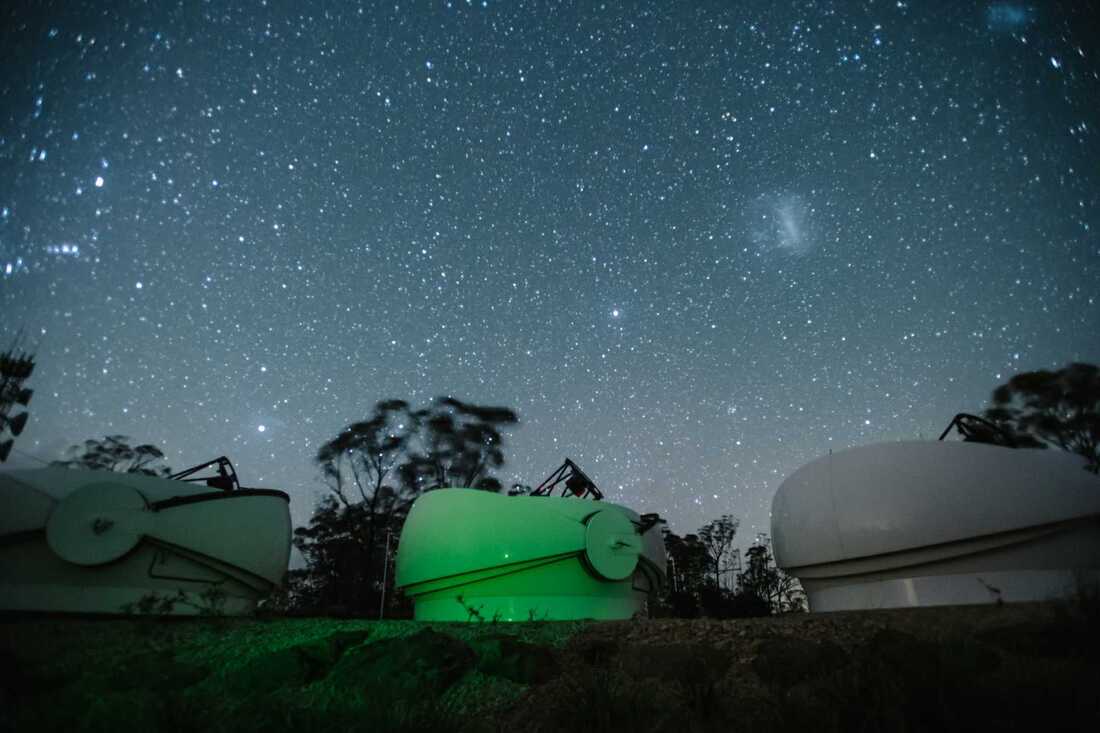
The MINERVA-Australis telescope array, at USQ's Mt Kent Observatory, is one of the tools used by USQ PhD students to search for exoplanets.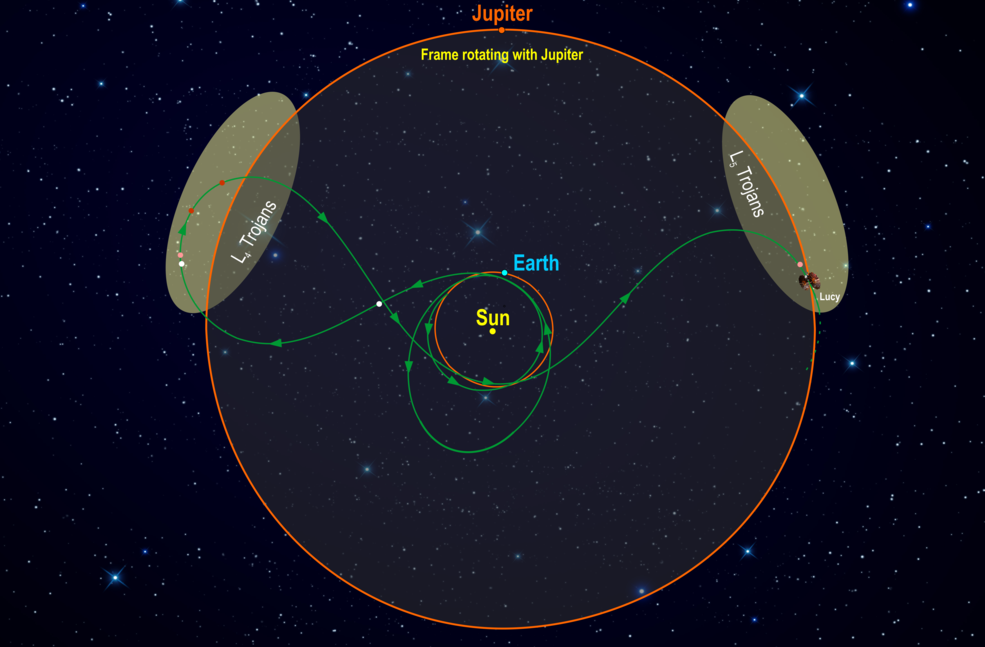
NASA's Lucy mission, launched in 2021, will visit and study the Jupiter Trojans. Dr. Tim Holt, who completed his PhD with USQ in 2021, studied remotely from the Southwest Research Institute, in Boulder, Colorado, home to the Lucy mission team. His doctoral work will inform the choices that team makes on the best targets for Lucy to visit and study well into the 2030s. Image credit :SwRI; CC-BY-SA 4.0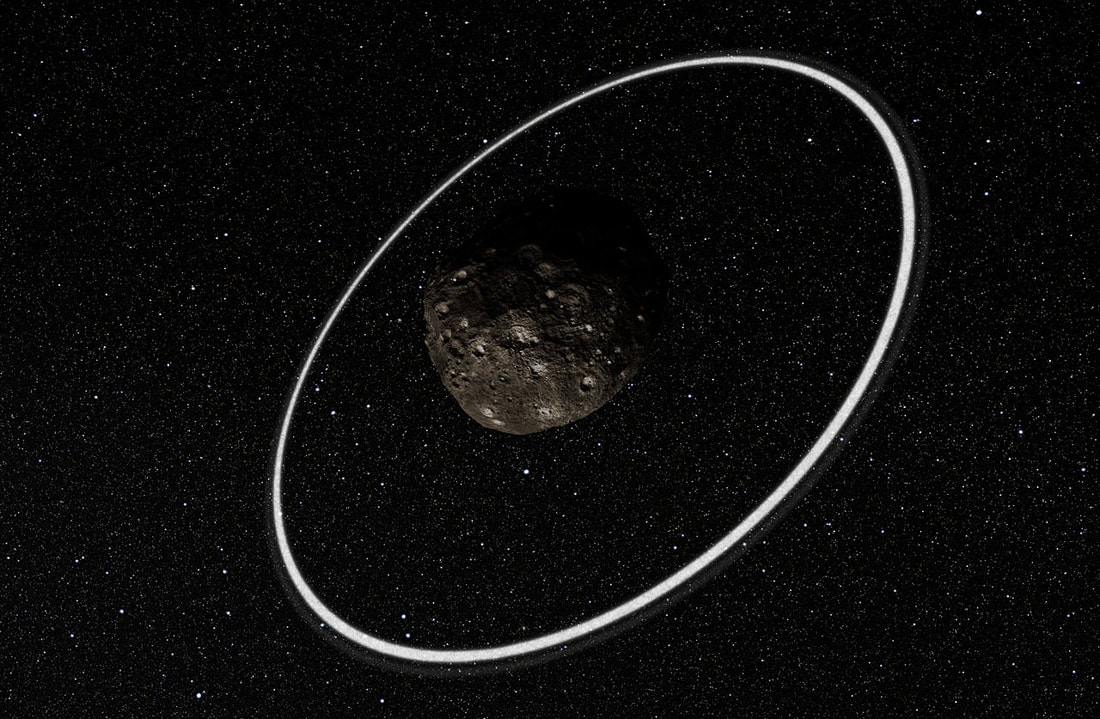
Dr. Jeremy Wood, who completed his PhD in 2018, studied the rings discovered orbiting the Centaurs 2060 Chiron and 10199 Chariklo. He found that those Centaurs have likely never come close enough to one of the giant planets for their rings to be disrupted, suggesting that the rings might be ancient, rather than recent acquisitions! Credit: ESO/L. Calçada/M. Kornmesser/Nick Risinger (skysurvey.org), CC BY 3.0 |